- Our School
- Families
- Curriculum
- Safeguarding & Personal Development
- Latest
- Contact us

At Carr we aim to create a positive reading and writing culture in school, where both are promoted and enjoyed by all pupils. Our intent is that all children – irrespective of their needs, abilities or background – leave Carr with excellent written communication skills, confidence in their proficiency in using the English language and with a genuine love for reading. Through the texts and other stimulus we choose, we aim to help our children understand diversity and the world around them so that they can be friendly, caring and respectful of everyone. Our children have exposure to a wealth of high-quality texts, which feed their curiosity and creativity; unlocking their imagination. When our children leave our school, we expect them to be avid readers, children who read fluently and widely, and are able to express preferences and opinions about the texts that they read. We want them to read for pleasure, having had access to a wide range of text types, genres and authors in order for them to make informed opinions about their favourites. We intend to inspire children to be confident in the art of speaking and listening, using discussion to communicate and further their learning. We want children to write clearly, accurately and coherently, adapting their language and style in and for a range of contexts, purposes and audiences. We want our children to acquire a wide range of vocabulary, a solid understanding of grammar and be able to spell new words effectively by applying the spelling patterns and rules they learn throughout their time at Carr. We believe that providing a language rich environment, with a strong focus on oracy, is essential to achieve success across the curriculum.
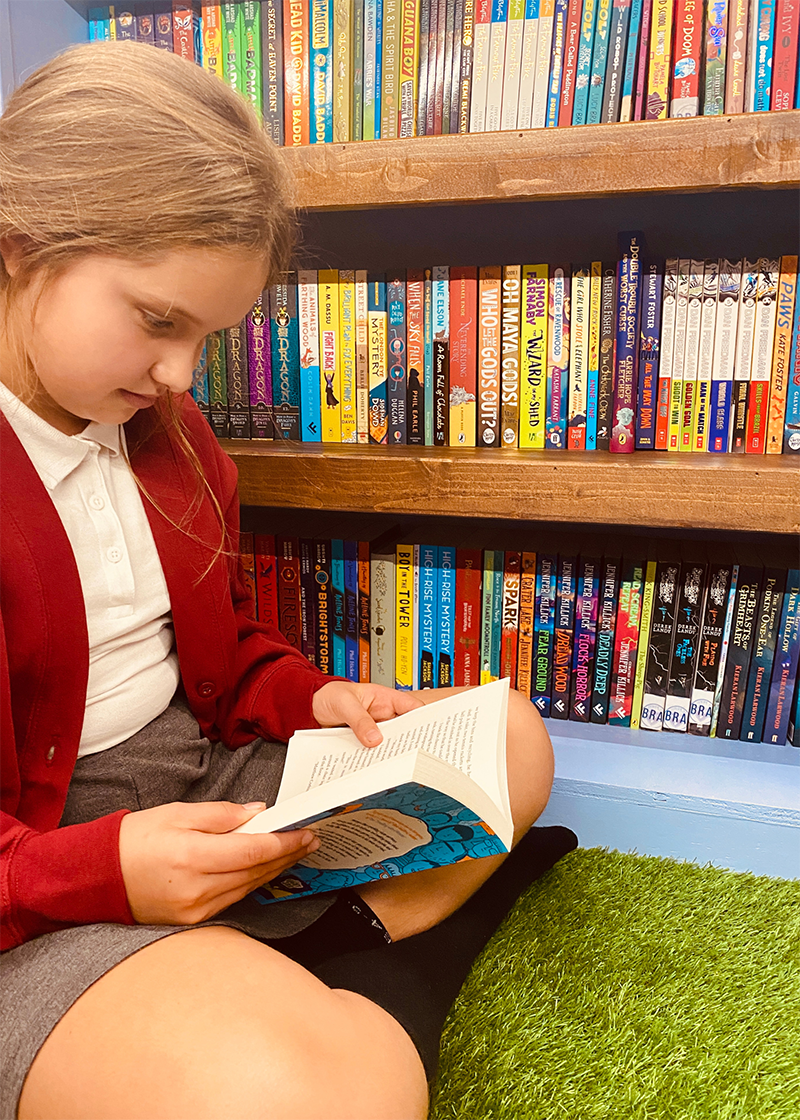
At Carr we believe that reading is the key to accessing all areas of the curriculum and we aim to create a positive reading culture across school. Our intent is that all children – irrespective of their needs, abilities or background – leave Carr with excellent skills in both reading fluency and comprehension as well as a genuine love for reading. Through the texts we choose, we aim to help our children understand diversity and the world around them so that they can be friendly, caring and respectful of everyone. Our children have exposure to a wealth of high-quality texts, which feed their curiosity and creativity; unlocking their imagination. When our children leave our school, we expect them to be avid readers, children who read fluently and widely, and are able to express preferences and opinions about the texts that they read. We want them to read for pleasure, having had access to a wide range of text types, genres and authors in order for them to make informed opinions about their favourites.
By the time our children join us in KS2, we expect them to be ready to participate in our daily whole-class reading lessons. The focus of these sessions is on vocabulary development, the development of specific reading comprehension skills and immersion in a wide range of text types. Each class also has a class novel which is read to the children every day so that a skilled teacher can model how to read. These class novels are used as a stimulus for deeper thinking and as a way of developing contextual knowledge and understanding. At Carr, reading is our priority and we encourage reading for pleasure as it plays a major role within reading development. By promoting reading in this way, we believe that we can also provide our pupils with a creative outlet and an alternative to the digital distractions that can affect their personal, physical and mental wellbeing.
There are 5 reading lessons per week, each 30 minutes in length:
In order to develop reading fluency, Year 3 children are taught phonics discretely each day in Autumn 1 following Little Wandle letters and sounds revised. This provides a smooth transition from Carr Infants to Carr Juniors. Any children across school requiring support with phonics access Little Wandle Letters and Sounds Revised Rapid Catch up programme.
As part of the Carr reading structure, children will access two 30 minute Reading Plus sessions weekly and teachers will aim to get a third 30 minute session per week as often as possible. The primary aims of Reading Plus are to develop and strengthen students’ reading fluency, comprehension, vocabulary, critical thinking, and reading stamina through personalized, adaptive online lessons that cater to individual skill levels. The program provides engaging online texts, multimedia, and assessments to build both speed and understanding, motivating students to become more confident and proficient readers.
Teachers plan and teach high quality whole-class reading lessons that follow our school’s reading structure. Books, extracts, vocabulary and comprehension skills are deliberately chosen and taught to ensure increasing challenge and progression. (See our Reading Continuum and progression documents).
Each child has a ‘Reading Jotter’ where they make their own notes during reading lessons. The children’s work is assessed by the class teacher during the reading lesson through questioning, listening to responses and addressing misconceptions at the point of teaching.
Each class has a class library where the children can choose exciting books to read for pleasure. These books are changed regularly to ensure the children are excited by books. Children can also access a wide range of books digitally through Reading Plus. In addition to the class libraries, we also have a school library – Bookend Cottage – where the children can choose to spend time reading books for pleasure as well as borrow books to read at home. We encourage our children to look after and take ownership of their class and school libraries.
Through our carefully selected class novels and text extracts, we ensure we are teaching our children to understand and respect diversity and the world in which they live. In each year group, book extracts are deliberately chosen to ensure increasing challenge and progression. They will access texts that include:
We take every opportunity to create a culture of reading for pleasure. We have ‘Reading Buddies’ where children are given opportunities to link up and read to each other. We have reading theme days throughout the year and an Illustrator Club for children to attend after school. Each class also has a ‘Book of the Week’ where good books and authors are further celebrated..
We know that some of our children are reluctant or self conscious readers so support is provided by the class teacher, TA, critical friends, Reading Ambassadors or other resources in the safe, friendly and nurturing environment of the classroom. We plan our lessons so that every child can succeed! Focus children are identified in each year group to complete extra Reading Plus sessions during intervention time further develop their reading fluency.
Children who are still working within the phonics phases will have a phonetically decodable book that is matched to the phase they have reached. They are also encouraged to choose a second book that they have chosen to read for pleasure. If children have secure phonic knowledge, they will have a reading book that is matched to their reading ability and one that they have chosen to read for pleasure.
Reading stamina is a child’s ability to focus and read independently for long-ish periods of time without being distracted or without distracting others. At Carr we recognise the importance of this and practise reading stamina at the start of each half term. Teachers explain what real reading looks like and each class aims to read for a given period of time without distraction (see our Reading Continuum).
Each half term a book is chosen for each Key Stage phase. This book could be a new release, a book we feel is a must read, a sequel to a class novel or a book which links to our wider curriculum. An assembly is delivered where the book is discussed, we learn about the author, book genre and hear an extract. This book then appears wrapped on the class bookshelf ready to be discovered by our excited classes.
Talking about texts and talking about reading in a learner-led and relaxed manner is at the heart of our Reading for Pleasure pedagogy. We make time each week to talk about books that we have read, make recommendations, discuss ‘Books of the Week,’ share information about new releases and generally engage in conversations about books and reading.
Reading assessment is informed by day-to-day teaching, formative and summative assessments. Children are formally assessed periodically throughout the year.
At Carr, the impact of our approach to reading is continually measured through learning walks, book looks and monitoring progress on Reading Plus as well as pupil and staff voices. At the end of KS2, our English data is reported nationally.
Writing at Carr is taught through the Literacy Tree scheme. Literacy Tree is an award-winning book-based platform for Primary English. The teachers in each year group have mapped out the objectives against the National Curriculum and ensured that the range of Writing Roots will ensure coverage of all of the objectives. In our year groups we repeat objectives several times in order to work towards depth of understanding and build confidence. The Writing Roots use an engaging text to inspire the children and throughout each unit the children are faced with many opportunities to write at length which builds resilience and stamina. Throughout the year, children in all year groups have opportunities to learn and explore writing in a range of fiction, non-fiction and poetry genres. All of which are carefully outlined in the long term plan.
We have a long term plan in place across the key stage, ensuring coverage of the National Curriculum with opportunities to consolidate, build on and extend skills and understanding.
In order to support writing fluency, Year 3 children are taught phonics discretely each day, at the start of every English lesson, following the Little Wandle scheme. This provides a smooth transition from Carr Infants to Carr Juniors.
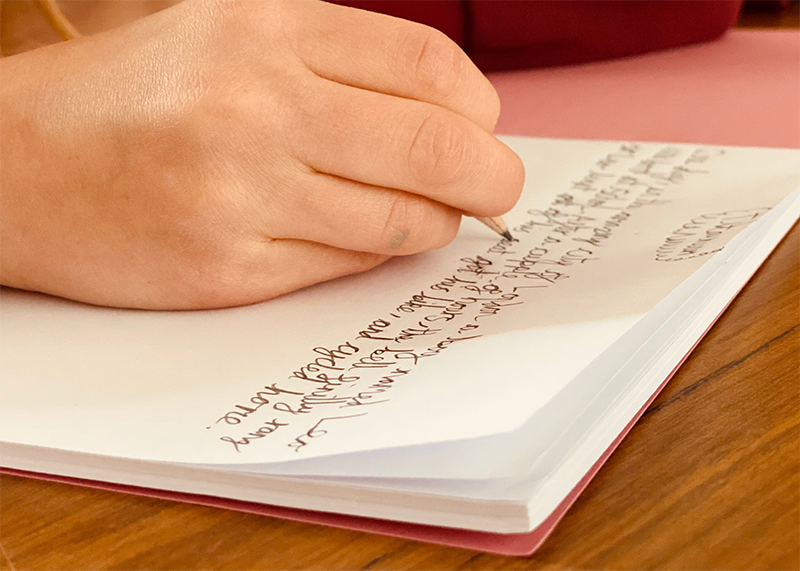
Each child has an ‘English book’ which is used to record all Writing Roots work. There are lots of opportunities for drama, group and whole class discussions and exploring new vocabulary through our texts which is also recorded within our books and within our learning environments in our classrooms. Children often refer back to this to support their planning and drafting. Children write on every other line to provide space for editing and improving writing.
Throughout lessons, children are given verbal feedback to help them progress. In each lesson, teachers will aim to do a complete ‘progress sweep’ to offer individual feedback. When drafting, all children will be given feedback from the previous lesson through a ‘Whole Class Feedback’ slide which addresses strengths, areas for development, grammatical and spelling errors and handwriting, whilst celebrating the successes of ‘Star Writers’. In books, teachers will highlight in green when children have incorporated elements from the success criteria into their written work.
This is taught through step-outs within lessons, making links between grammatical elements and writing purposes. English lessons may start with a short grammar starter, which will reflect and embed skills. Each child will also complete a Grammar and spelling test every half term. Their scores will be monitored so that trends can be identified and addressed.
Each child has a ‘Publishing book’ to showcase their finished drafts for each Writing Root. When appropriate children are provided with additional supporting resources linked to their piece of writing. These along with the class working walls are used to support children to become independent learners.
We take every opportunity to create a love for Writing. We advertise many regional and national competitions during the year and often have cause to celebrate when our children’s writing is chosen to be published. We also take part in writing events across our family of schools within our Trust.
This can come in many forms and may be different according to the needs of each child. Adults can be used to support small groups and individuals to ensure children can access the learning and ‘keep up’ during the lessons. Working walls and other classroom resources are also used especially as a tool to encourage independent learning. Children are encouraged to ‘magpie’ ideas from others and teachers will ‘chirp’ good examples throughout the lessons for children to use in their own work. Children make good use of their ‘critical friends’ when editing their writing and these are usually mixed ability pairs to encourage all learners to extend their thinking.
At Carr, the impact of our approach to English is continually measured through learning walks and book looks as well as pupil and staff voice. At the end of KS2, our English data is reported nationally.